
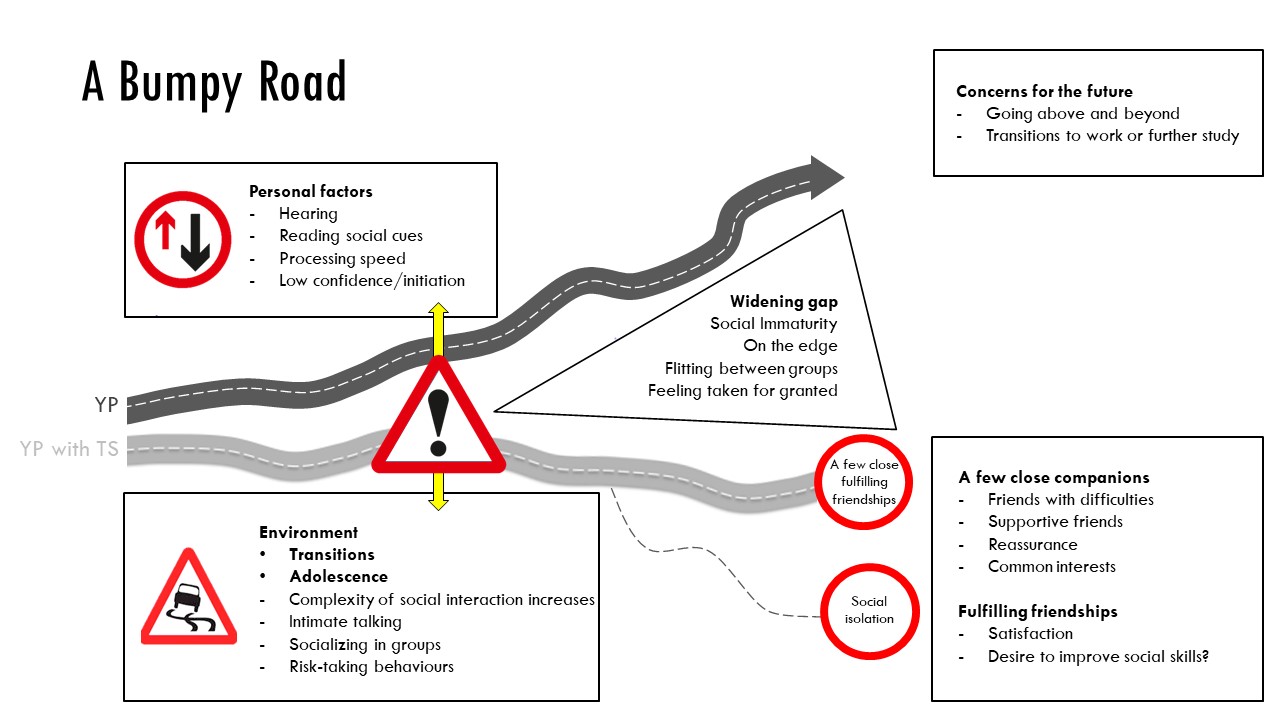
We interviewed girls and young women with Turner Syndrome and their parents about their experiences of friendships. The findings of the study are published in an article called Experiences of social interaction in young women with Turner syndrome: A qualitative study and the picture below summarizes the main themes of our discussions.
The central theme, “A wide range of competencies,” describes the history of socialization and current friendships. The second theme, “Explanatory factors,” identifies personal and contextual/environment factors that shape the social experience. The third theme, “Out of sync,” describes the consequences of the social differences.
Young women with TS experienced a “wide range of social competencies,” ranging from a few close fulfilling friendships to social isolation. Most had experienced difficulties with friendships growing up. They attributed social challenges to “personal and environmental factors.” The personal factors included difficulties reading social cues and body language, understanding humour, hearing adequately, and paying attention, whereas their parents highlighted differences in attitudes towards socialisation. The key environmental factor was going through adolescence. Adolescence marks the beginning of a developmental period where the complexity of socialisation increases. The magnitude of these challenges to social integration intensified during adolescence. They felt increasingly “out of sync” with their peers as the “gap widened”. Parents were concerned for their daughters futures, especially in regards to being taken advantage of socially and managing new social challenges at work or in further education.

 Jeanne Wolstencroft